Sepang 2026 · Stories
What Sepang Does to a Human Body
By Will Tygart · September 28, 2026
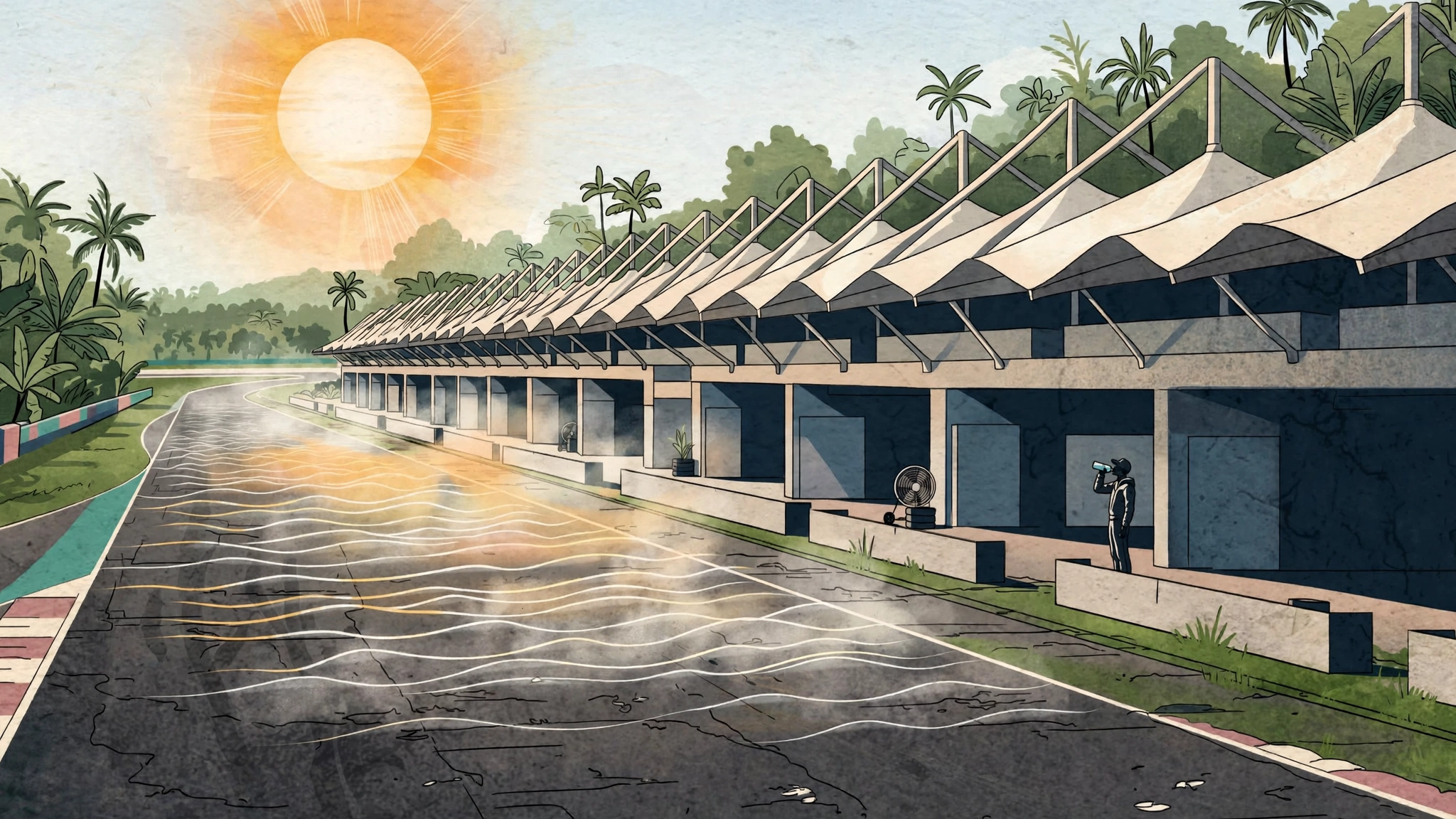
Forget the cars for a minute. Let's talk about the people inside them.
A Formula 1 driver at Sepang loses somewhere in the neighborhood of several pounds of water weight over a race distance. The cockpit sits above an engine running at hundreds of degrees. The air coming through the vents is hot. The air outside is hotter — thick, tropical, the kind of humid that makes a short walk feel like work. And the driver is doing the most concentrated athletic task in sports for close to two hours, pulling lateral loads through fast corners that would make most of us gray out, while making decisions in fractions of a second.
Sepang doesn't just test cars. It interrogates bodies.
The drivers know what's coming. Over the summer break, they put in extra training specifically for this stretch of the season — Formula 1's own race preview said as much. You don't prepare for Sepang the way you prepare for a cool evening race in Europe. You prepare the way you'd prepare for anything that wants to wring you out: heat acclimation, hydration strategy, core strength for the high-speed changes of direction. The fittest athletes in motorsport, and this is the week they earn it.
And then there's the sky, which is the fastest thing at the circuit.
Sepang's weather doesn't build. It detonates. A dry, blazing afternoon can turn into a tropical deluge in minutes — the kind of rain that doesn't fall so much as arrive, all at once, turning a 300 km/h racing circuit into something closer to a river with painted lines. The 2009 Malaysian Grand Prix is the proof: the monsoon came down so hard the race had to be red-flagged and never restarted. Officials called it. The sky won.
That's the particular cruelty of this place. It's not one challenge, it's two, and they alternate without warning. Heat that cooks the tires and the driver, then rain that erases every setup choice the engineers made that morning. A team can nail the dry balance and be helpless by lap 30. A driver can be the fittest man on the grid and still be the one aquaplaning toward the barrier when the clouds open.
I think this is why the old hands talk about Sepang the way they do. Ask around the paddock and you'll hear the same thing former Malaysian driver Alex Yoong said this week: the drivers enjoy it, and the whole paddock likes coming to Malaysia. That's not nostalgia talking. That's professionals expressing genuine affection for a place that hurts them. There's no better review than that.
There's a tendency to describe heat as background — scenery, atmosphere, a broadcast graphic showing 35 degrees air temperature. It's not background. It's an opponent. It degrades the tires, which degrades the grip, which forces the driver to work harder, which raises the heart rate, which makes the next decision a fraction slower. By the final ten laps, the race isn't just car against car anymore. It's body against climate, and the climate doesn't get tired.
When the lights go out on Sunday, watch the opening laps for the racing, sure. But watch the closing laps for the humans. The ones still standing at the end of Sepang — still precise, still brave, still thinking clearly with their suits soaked through — those are the performances that don't show up in the lap charts.
The cars are marvels. The people inside them, holding it together while the tropics do their worst, are something else entirely.